Sunday, May 5, 2013

At the heart of North America's first planned city

Mexico offers more than just the standard mariachi and salsa, according to Vacations by Newport. The following blog describes what other treasures await those travelling to Mexico.

Image Source: thebesttraveldestinations.com

Mexico is the home to North America’s greatest native civilizations. The familiar pyramids and ruins of the Maya and Aztecs have entered the popular consciousness as the pinnacle of Mesoamerican civilization. However, their contemporary and predecessor have monuments far more magnificent and had power and influence that rivaled that of its contemporaries elsewhere in the world.

Image Source: unesco.org

Back when the Maya city-states were still emerging, their lands were dominated by a far greater nation, whose capital city was to inspire awe in all its subsequent successors. Known to the Aztecs as Teotihuacan—city of the gods—this capital was America’s first planned city. In its heyday, the city was a multi-ethnic metropolis that exerted power and influence far beyond its reach. It was one of the largest cities in Pre-Columbian America and among the greatest examples of city planning in history.

The people of Teotihuacan had adhered strictly to their geometric grid, punctuated by large public squares lined with platforms in the talud-tablero style that would be common in Mesoamerica for centuries to come. Also notable are the two pyramids built by its residents; the pyramid of the sun is the largest pyramid by sheer volume and base area alone, dwarfing those in Egypt in all but sheer height.

Image Source: yucatan-holidays.com

This great city served as the cultural inspiration for the many civilizations that followed, including the iconic Maya and Aztecs. Even as ruins, the city continues to draw crowds awestruck by the sheer skill and achievements of its builders and the power it had exerted in its lifetime.


Visit this website for more information on vacations to Mexico.

Tuesday, April 16, 2013

Understand the Eiffel Tower and be spared the hundred-step climb

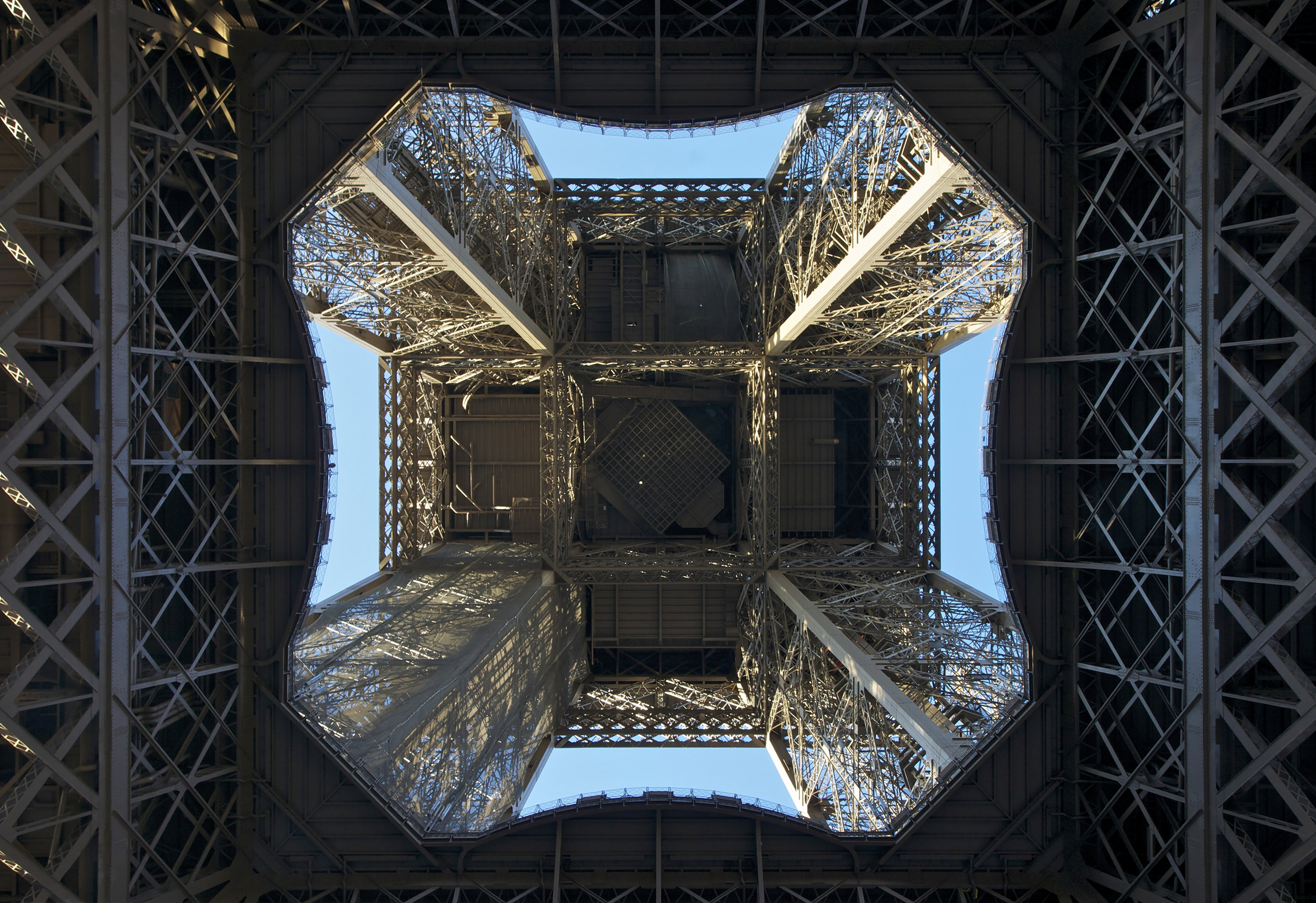
Its appearance is already polarizing, yet the Eiffel Tower, the overachieving mass of iron that overtakes a whole city below, attracts more than five million tourists a year. It is, sadly, a cultural and tourism cliché that now leaves little to the critical imagination.

Image source: commons.wikimedia.org


The French, with irony hardwired into their genes, applauds condemnations of the monument. Declaring it a monstrosity is a show of solidarity for French cultural icons who had voiced the same thing. Among them, French literature’s luminaries Guy de Maupassant, Alexandre Dumas, and Emile Zola had common hatred for engineer Gustave Eiffel’s 1889 creation. They attacked it from the pulpit of taste that France had claimed theirs, and used it as a figure of speech for France’s internal conflicts.

Image source: commons.wikimedia.org


The Catholics hated it as a sponsored symbolism of the secular government that ran France. Among detractors were anti-Semitic partisans who saw in it evidence of Jewish bankers’ excess, even though its creator wasn’t Jewish. Artists and intellectuals hated it for its vain politics. It was built to impress the rest of the world --- France included --- during the Expositions Universelle of 1889 (World’s Fair of 1889), and it naturally had to bring a monumental novelty that will stand tall against the Sacred Heart and Notre Dame, which are attractions on their own. Finally, it was thought as a means for espionage, its height coddling traitors transmitting their codes at the summit.

Image source: commons.wikimedia.org


Make no mistake: The French and tourists still love it, and covered in dancing lights, it dazzles as an unbeaten beacon of modernity. What it stood for, though, is an intellectual climb, perhaps best left out of vacations. But it pays to know.

Newport Marketing guides tourists to unforgettable vacation itineraries in the world’s most visited sites. Building one’s dream vacation starts with flipping over leisure packages. Start at this site.